
Solo Serve & Return Foundations: Consistency When Nobody Will Rally
Serve and return are the only two shots you hit alone in every match — yet most solo practice is random dinking. A rebound ball trainer lets you feed consistent returns so you can train toss rhythm, return prep, and depth without chasing balls across the street.
Serve Foundation Block
Contact height: waist to hip for drive serve; knee to waist for drop serve.
Rhythm: bounce (if drop) → paddle back → contact → follow through to target.
| Week | Serve focus | Reps/day | Pass |
|---|---|---|---|
| 1 | Drop serve legality + depth | 30 | 25 in back half of target zone |
| 2 | Drive serve to backhand corner | 25 | 18 in corner tape |
| 3 | Mix: 2 drop, 1 drive pattern | 20 patterns | 15 clean sequences |
| 4 | Serve → rebound return sim | 15 cycles | 10 deep returns after own serve |
Return Prep Drill
Mount rebound trainer to simulate serve to mid-body. Split-step as ball releases. Return deep to tape zone 3 ft from baseline. Score depth before direction.
Depth Targets
Tape three zones: short (service line), mid, deep (within 3 ft of baseline). Returns must land deep zone 70% before adding angle.
Fault / Fix Table
| Fault | Fix |
|---|---|
| Serve into net | Higher toss on drop; contact in front |
| Short returns | Aim 2 ft past baseline tape; follow through |
| Late split on return | Split on trainer release click/sound |
Return Target Priority
Deep middle beats sharp angle until you hit deep zone 70%. Angles from short returns get punished at 4.0+.
Serve Legality Self-Check
Film serve from side — paddle head below wrist at contact on drop serve; no pre-spun toss on drive. Illegal serve practice is negative training; verify once weekly on video.
Match Scenarios
Against bangers: Reset depth before speedups; win consistency cycles, not first firefight.
Against soft-game specialists: Extend dink patience — pass standard is 8 consecutive soft dinks before one speedup attempt.
Sun / wind outdoor: Re-establish grip pressure every four balls; wind tempts over-gripping.
Deep Dive: What Separates Pass from Almost
In “Solo Serve & Return Foundations: Consistency When Nobody Will Rally”, the difference between a rep that counts and one that wastes time is usually one detail you cannot feel without a checkpoint. Recreational pickleball players often stack volume without criteria — fifty sloppy reps beat twenty scored ones. This section adds the layer coaches would catch on the second ball: measurable gates, not vibes.
Before every session, write down three numbers: best streak, clean rep percentage, and the one fault that ended your longest streak. After two weeks, the fault pattern tells you what to fix next — not YouTube.
Session Log Template (Copy Each Workout)
| Field | Today |
|---|---|
| Date / duration | ___ |
| Warm-up completed? | Y / N |
| Primary drill block | ___ |
| Best consecutive pass streak | ___ |
| Clean rep % (total) | ___% |
| Fault that ended best streak | ___ |
| Tomorrow’s one focus | ___ |
Equipment Notes for SoloReps Pickleball Rebound Ball Trainer
Mount height, distance from target, and surface type change feedback more than most players expect. On slick indoor floors, shorten recovery steps. On turf or carpet, allow one extra inch of backswing before speed jumps. If the pickleball tool feels “too easy,” you are usually standing too close or gripping too hard — move back six inches and drop tension one step on the pressure scale before adding power.
Inspect contact surfaces weekly: scuffs and compacted padding reduce realistic rebound. Wipe down and rotate mounting angle slightly so you do not groove only one contact point.
Match Transfer Checklist
Use this before your next competitive round or league night. If you cannot check four of five, do a 10-minute solo block instead of hitting random balls.
- I can pass today’s primary drill standard without guessing.
- I filmed at least one set this week and spotted my recurring fault.
- I know my one cue word for pressure (e.g., “soft,” “through,” “parallel”).
- I have a pre-match mini-routine under 12 minutes.
- I logged sessions twice this week minimum.
Advanced Progressions (After Base Pass)
Week 5+ — Randomize: Flip a coin before each rep: forehand/backhand, line/cross, speed 70% or 90%. Pass when clean rep % stays within 10 points of structured block.
Week 6+ — Fatigue set: After pass standard, add 10 reps with 20 jumping jacks first. Mimics late-set pickleball when legs go. If form breaks, stop — fatigue reps with bad form are anti-training.
Week 7+ — Constraint: Narrow targets by 6 inches or tighten pass threshold by one rep. Do not add both at once.
FAQ
How long until I see match results? Most players notice fewer free errors in 3–4 weeks of logged solo work, not because they got stronger, but because they stopped repeating the same fault under pressure.
Can I combine this with lessons? Yes — use solo blocks to install one lesson cue at a time. More than one new cue per week dilutes retention.
What if I only have 10 minutes? Run the primary pass drill only. Skip extras. Ten scored minutes beats forty mindless minutes.
Indoor vs outdoor? Indoor builds touch and consistency; outdoor validates wind, sun, and lie. Do both if you can — but never skip indoor scoring when weather blocks you.
Related Guides
Stack this article with others in the pickleball Training Hub. Build a four-week rotation: two technique articles, one footwork or setup article, one match-transfer week. Consistency across the rotation matters more than bingeing one topic.
Four-Week Daily Minute Plan
Week 1 — Mon: Primary drill pass block only (10 min) + log. Tue: Half volume, perfect form. Wed: Full block, beat best streak by 1. Thu: Video or audio check only. Fri: Full block. Sat: Randomized constraints. Sun: Rest or 5 min shadow.
Week 2: Add secondary drill from fault table for 5 min before primary block. Pass standard increases by one rep.
Week 3: Combine primary + footwork or movement rule every rep. Reduce speed 10% if streak drops.
Week 4: Match simulation — score only consecutive passes; stop session on two failed streaks in a row (quality cutoff).
Building Your Solo Practice Identity
Players who improve alone treat practice like a lab: one variable, measured reps, written log. Players who stall treat practice like entertainment: random shots, no numbers, new tip every week. This article gives you the protocol; the log makes it stick.
Print the session template. Tape it where you practice. Circle the fault that ended your best streak — that circle is your lesson for tomorrow.
When to Stop a Session Early
End on a pass, not a fail. If you beat your streak and feel sharp, stop — do not grind tired reps. If you fail three streaks in a row, drop speed 20% or shorten target; if still failing, stop and film one rep. Bad tired reps are stored as habit.
Parent / Coach Notes for Junior Players
Juniors need shorter blocks (6–8 min) with game scoring. Turn streaks into points; reset on fault but keep tone positive. Same pass criteria — juniors often rush; timer every 30 seconds for one breath reset reduces junk reps.
Recovery and Mobility (5 Minutes, Optional)
After sessions: wrist circles, shoulder external rotation band, hip hinge stretch. Solo repetition volume adds joint stress; mobility is not optional if you practice 4+ days weekly.
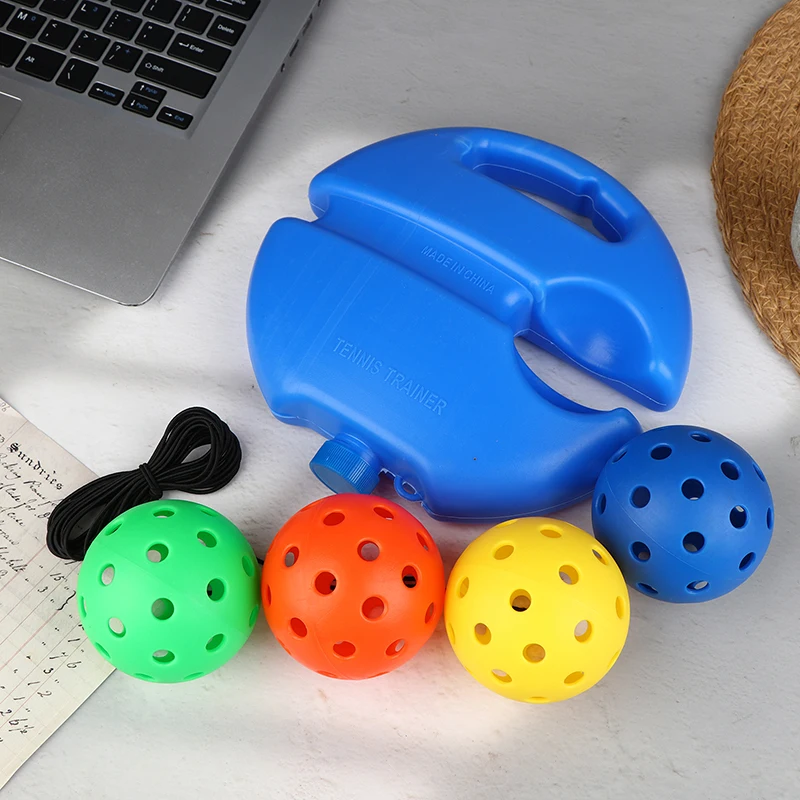
Pickleball Rebound Ball Trainer
Reliable rebound feed for serve rhythm, return prep, and groundstroke reps in a garage or driveway.
$27.99
15-Minute Session Template
5 min serve block → 5 min return depth → 5 min serve+return cycle. Log best deep return streak.
More pickleball training at SoloReps.